· 4 min read · Central Ohio
How to Winterize Your Home in Central Ohio
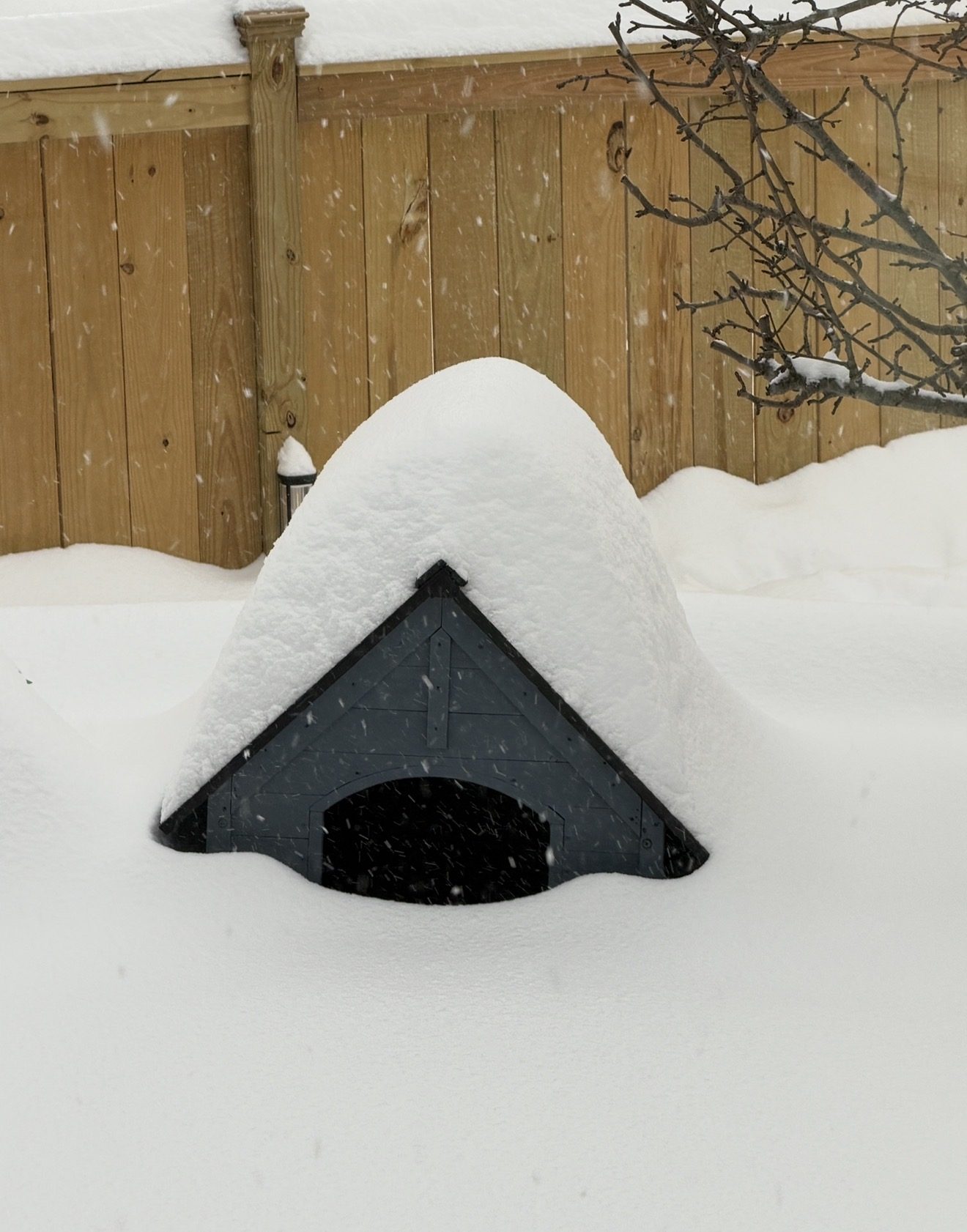
A little work now saves a lot of worry later
How do you winterize a home in Central Ohio? Have the furnace checked, disconnect garden hoses and drain outdoor faucets, clean the gutters, seal drafts around doors and windows, test the sump pump, check your smoke and carbon monoxide detectors, and pick up ice melt before the first storm. Each step is below.
Central Ohio winters can swing from mild to bitter cold in the same week. A few chores in November can help keep your home warm, dry and safe until spring.
My family owned a general contracting company, and I've seen what a frozen pipe or a clogged gutter can do to a house. Most of the time, the fix would have taken an afternoon.
That's my dog Bambi's house in the photo above, after a big snowstorm. Bambi got snowed out of his own house. He should have planned ahead and winterized! Don't be like Bambi. Here's the checklist I use for my own home.
1. Have the furnace checked
Your furnace does most of the work this time of year, so give it some attention before the first deep freeze.
- Change the filter. A clogged filter makes the furnace work harder. Check it every month or two during heating season.
- Schedule a tune-up. A licensed heating technician can spot worn parts before they fail on the coldest night of the year.
- Clear the area around it. Keep boxes, paint cans and anything flammable away from the furnace and water heater.
2. Protect your pipes and outdoor faucets
Frozen pipes are one of the most expensive winter surprises a homeowner can have.
- Disconnect garden hoses. A hose left attached can trap water in the faucet, where it can freeze and crack the pipe.
- Shut off and drain outdoor faucets if your home has an inside shutoff valve for them.
- Have the sprinkler system blown out if you have one.
- Find your main water shutoff now. If a pipe ever bursts, you'll want to know exactly where it is.
- On very cold nights, open the cabinet doors under sinks on outside walls so warm air can reach the pipes.
- Let a faucet drip. On the coldest nights, leaving a small trickle of water running from a faucet on an outside wall can help keep the pipes from freezing.
3. Clean the gutters and check the downspouts
Once the last leaves come down, clear the gutters. When gutters are full, water and melting snow can back up under the roof edge or spill next to your foundation.
Make sure the downspouts carry water a few feet away from the house. A simple extension can help keep the basement dry.
4. Seal the drafts
Stand by your doors and windows on a windy day. If you feel cold air, it's worth a quick fix.
- Replace worn weatherstripping around doors.
- Add a door sweep if you can see daylight under an exterior door.
- Caulk gaps around window trim.
Weatherstripping, door sweeps and caulk don't cost much, and they make the house feel warmer right away.
5. Test the sump pump
If your home has a sump pump, pour a bucket of water into the pit and make sure it turns on and drains. Winter thaws and early spring rain can put it to work when you least expect it.
A battery backup is worth considering, especially if you have a finished basement. I learned the hard way how much damage water can do to one.
6. Check your safety basics
- Test smoke and carbon monoxide detectors and change the batteries. Homes with a gas furnace, gas water heater, fireplace or attached garage should have working CO detectors.
- Have the chimney inspected before you use a wood-burning fireplace.
- Keep space heaters away from curtains, bedding and furniture, and turn them off when you leave the room.
7. Get ready for snow and ice
Pick up ice melt and check your shovel or snow blower before the first storm, when store shelves empty fast.

Bambi is still looking for his front door. Clear a path for the pets, too.
If you use ice melt on a new concrete driveway or walkway, check the label first. Some products can damage newer concrete.
Thinking about selling in the spring?
Winter maintenance does double duty if a move is on the horizon. Buyers and inspectors notice a well-cared-for furnace, clean gutters and a dry basement.
Keep the receipts from your furnace tune-up and any repairs. They help show buyers the home has been looked after.
If you're starting to think about a move, this is a great time to plan. Before we look at a single house, I want to know your real numbers. I'll walk you through the money and the timing, with no pressure. Send me a note or call or text me at 513-836-6601.
Want to see what homes are doing in your area? Request a free market report.